For years, Applicant Tracking Systems (ATS) have been the backbone of recruitment. They promised structure, organization, and compliance. And for a long time, that was enough.
But hiring has changed.
Today’s job market is faster, more competitive, and deeply candidate-driven. Recruiters are expected to hire better talent in less time, with fewer resources—while still delivering a great candidate experience. Unfortunately, traditional ATS platforms were not built for this reality.
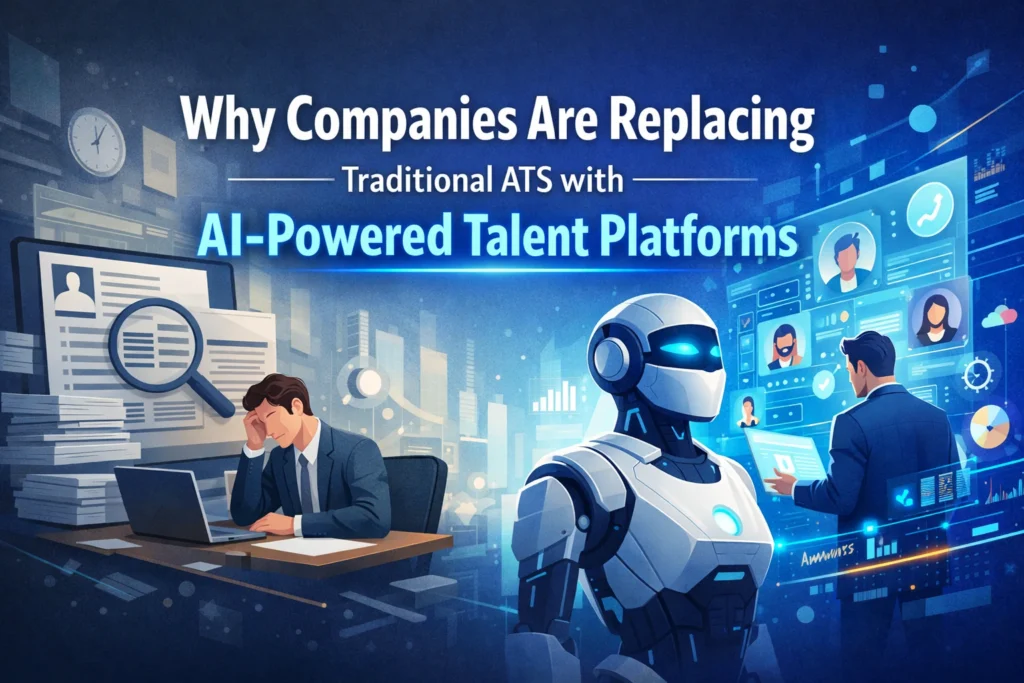
That’s why companies across industries are moving away from legacy ATS solutions and adopting AI-powered talent platforms that think, learn, and adapt.
Let’s explore why this shift is happening—and what it means for the future of hiring.
The Limitations of Traditional ATS
Traditional ATS platforms were designed primarily to store resumes and track applicants, not to intelligently hire talent. While they served a purpose in the past, their limitations are now impossible to ignore.
1. Keyword Matching Instead of Skill Understanding
Most ATS systems rely on rigid keyword filters. If a resume doesn’t contain the “right words,” even highly qualified candidates get rejected.
This leads to:
- Missed talent
- Overlooked transferable skills
- Biased shortlisting
- Poor diversity outcomes
Recruiters often end up reviewing hundreds of resumes manually because they don’t trust the system’s results.
2. Slow and Manual Hiring Processes
Legacy ATS tools require recruiters to:
- Screen resumes manually
- Shortlist candidates by hand
- Coordinate interviews across platforms
- Follow up manually
This slows down hiring cycles and frustrates both recruiters and candidates. In a market where top talent moves fast, delays cost companies great hires.
3. Poor Candidate Experience
Traditional ATS platforms are infamous for:
- Long application forms
- No communication updates
- Generic rejection emails
- No personalization
Candidates feel like they’re applying into a “black hole.” This damages employer brand and reduces future applicant interest.
4. No Real Intelligence or Insights
Most ATS platforms:
- Do not learn from past hiring decisions
- Offer limited analytics
- Cannot predict hiring success
- Provide no workforce intelligence
They store data—but don’t use it.
The Rise of AI-Powered Talent Platforms
AI-powered talent platforms are not just upgraded ATS tools—they represent a complete shift in how hiring works.
Instead of managing applicants, these platforms focus on intelligent talent matching, automation, and decision-making support.
Key Reasons Companies Are Making the Switch
1. Smarter Talent Matching with AI
AI-powered platforms analyze resumes beyond keywords. They understand:
- Skills
- Experience relevance
- Career progression
- Context and potential
This means candidates are evaluated for fit, not formatting.
Result:
- Better shortlists
- Reduced unconscious bias
- Stronger hiring outcomes
2. Faster Hiring with Automation
AI automates time-consuming tasks like:
- Resume screening
- Candidate ranking
- Interview scheduling
- Follow-ups
Recruiters spend less time on admin and more time building relationships with candidates and hiring managers.
Hiring cycles that once took weeks can now take days.
3. Data-Driven Hiring Decisions
AI-powered talent platforms provide actionable insights such as:
- Quality of hire predictions
- Time-to-hire analytics
- Skill gap analysis
- Hiring funnel optimization
Instead of guessing, HR teams make evidence-based decisions.
4. Improved Candidate Experience
Modern AI platforms focus heavily on candidate experience by offering:
- Easy application processes
- Real-time updates
- Personalized communication
- Faster feedback
Candidates feel valued, informed, and respected—even if they’re not selected.
This strengthens employer branding and long-term talent pipelines.
5. Bias Reduction and Fair Hiring
When used responsibly, AI can help reduce bias by focusing on:
- Skills over background
- Performance indicators over assumptions
- Objective matching criteria
This supports more inclusive, fair, and diverse hiring practices—something traditional ATS systems struggle to deliver.
6. Scalability for Growing Businesses
As companies scale, hiring volume increases. Traditional ATS platforms often collapse under complexity.
AI-powered talent platforms scale effortlessly by:
- Handling large applicant volumes
- Supporting multiple roles and locations
- Adapting to changing hiring needs
They grow with the business instead of holding it back.
Traditional ATS vs AI-Powered Talent Platforms
| Feature | Traditional ATS | AI-Powered Talent Platform |
| Resume Screening | Keyword-based | Skill & context-based |
| Automation | Limited | Advanced & end-to-end |
| Hiring Speed | Slow | Fast |
| Candidate Experience | Poor | Personalized |
| Analytics | Basic reports | Predictive insights |
| Bias Reduction | Minimal | Strong |
| Adaptability | Rigid | Intelligent & learning |
Why Forward-Thinking Companies Are Acting Now
The companies replacing their ATS today are not reacting—they’re preparing for the future.
They understand that:
- Talent is their biggest competitive advantage
- Speed matters in hiring
- Candidate expectations are rising
- Data-driven decisions outperform gut instinct
Sticking with outdated systems is no longer safe—it’s risky.
The Future of Recruitment Is Intelligent, Human, and AI-Driven
AI-powered talent platforms don’t replace recruiters. They empower them.
By handling repetitive tasks and surfacing the best candidates, AI allows recruiters to:
- Focus on people, not paperwork
- Build stronger relationships
- Hire more strategically
- Deliver better business impact
The future of hiring isn’t about tracking applicants—it’s about unlocking talent potential.
Final Thoughts
Traditional ATS platforms had their moment—but the hiring world has moved on.
AI-powered talent platforms offer:
- Smarter hiring
- Faster decisions
- Better experiences
- Stronger outcomes
Companies that embrace this shift will attract better talent, build stronger teams, and stay ahead in an increasingly competitive market.
Those that don’t? They risk falling behind.
Ready to Experience the Future of Hiring?
Discover how TalentPick AI helps companies move beyond outdated ATS systems and build intelligent, future-ready hiring processes.
Hire smarter. Hire faster. Hire better.